Center for the Destruction and Restoration of the Body!
Here is the English translation:
The Thyroid and Parathyroid Glands: The Invisible Conductors of Our Body
The Thyroid Gland: Small but Extremely Important
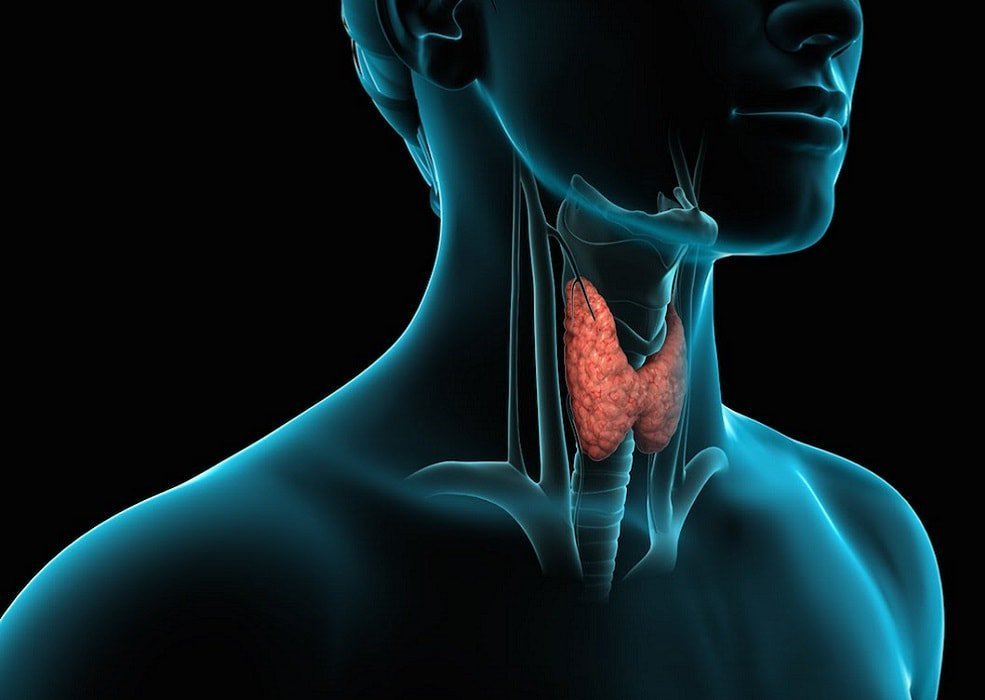
Imagine an orchestra where every instrument plays its own part. The thyroid gland is the conductor of this orchestra, setting the tempo and harmony of the entire symphony of our body. It is located at the front of the neck, like a butterfly wrapped around the trachea.
What Does the Thyroid Gland Do?
It Produces Hormones
These hormones regulate metabolism — all the chemical reactions in our body. They influence how we use energy, how fast our heart beats, and how sensitive we are to temperature.
The thyroid gland produces hormones called:
Thyroxine (T4)
Triiodothyronine (T3)
Calcitonin
T3 and T4 act like managers — “top executives” delivering instructions to all the cells of the body, including brain cells.
What Are T3 and T4? A Simple Explanation
Imagine your thyroid gland as a small factory that produces special hormones regulating many processes in your body. These hormones are called triiodothyronine (T3) and tetraiodothyronine (T4). They are like small couriers delivering important instructions throughout the body.
T3 (Triiodothyronine)
The most active of the two hormones. It can be compared to a fast and energetic courier who immediately begins completing tasks.
T4 (Tetraiodothyronine, also called Thyroxine)
This hormone can be compared to a slower courier who delivers packages to a warehouse, where they are converted into T3 before being delivered to the final destination.
T3 and T4 are also called thyroid hormones.
What Are T3 and T4 Responsible For?
These hormones play a key role in many body processes:
Metabolism – They ignite the metabolic “fire,” regulating how fast the body burns calories and produces energy.
Growth and Development – Especially important for children’s growth and for maintaining organ function in adults.
Body Temperature – Help maintain optimal body temperature.
Cardiovascular System – Affect heart rate and blood pressure.
Nervous System – Play an important role in brain development and function.
T3 in More Detail
T3 (triiodothyronine) contains three iodine atoms in its molecule. The number of iodine atoms is reflected in its name (“tri” meaning three).
Differences Between T3 and T4
Number of iodine atoms – T3 contains three iodine atoms; T4 contains four.
Activity – T3 is more active and works faster and more powerfully than T4.
Conversion – T4 is converted into T3 in body tissues.
Why Do We Need Both?
Both regulate metabolism, growth, and development.
They interact with each other to ensure fine-tuned regulation of all processes in the body.
How Do T3 and T4 Work?
Thyroid hormones interact with virtually all cells in the body. They bind to special receptors on the cell surface and transmit signals inside. These signals trigger a cascade of reactions that change how the cell functions.
Comparing T3 and T4 to an orchestra conductor is an accurate metaphor:
They coordinate numerous body systems.
They influence the speed of metabolic processes.
They interact with other hormonal systems, forming a complex regulatory network.
They are essential regulators that maintain homeostasis.
Why Is Iodine So Important?
Hormone Structure – Iodine atoms are integral parts of T3 and T4 molecules.
Biological Activity – Iodine gives thyroid hormones their activity.
Hormone Synthesis – The thyroid uses iodine from food to produce T3 and T4.
Calcitonin — The Third Thyroid Hormone
When we eat calcium-containing foods, calcium enters the bloodstream. Then calcitonin — produced by the thyroid gland — begins to work. Its job is to incorporate calcium into bones and organs. Without calcitonin, calcium cannot properly move from the blood into tissues.
How Calcitonin Works (Simple Explanation)
Calcitonin regulates blood calcium levels and supports bone health. It acts as a “calcium manager” in the body.
Main Functions:
Slows bone breakdown by suppressing osteoclasts (cells that break down bone).
Stimulates new bone formation by activating osteoblasts.
Lowers blood calcium levels by promoting calcium deposition in bones.
Why Is Calcitonin Important?
Maintains strong bones.
Keeps blood calcium levels stable for muscle contraction, nerve transmission, and blood clotting.
If the thyroid gland is diseased, calcitonin production may be disrupted. Calcium may remain in the blood but fail to integrate into bones and tissues. This can lead to:
Brittle nails
Hair loss
Chronic joint and bone pain
Blood tests may show normal calcium levels, but without calcitonin, calcium may not be properly utilized.
The Parathyroid Glands
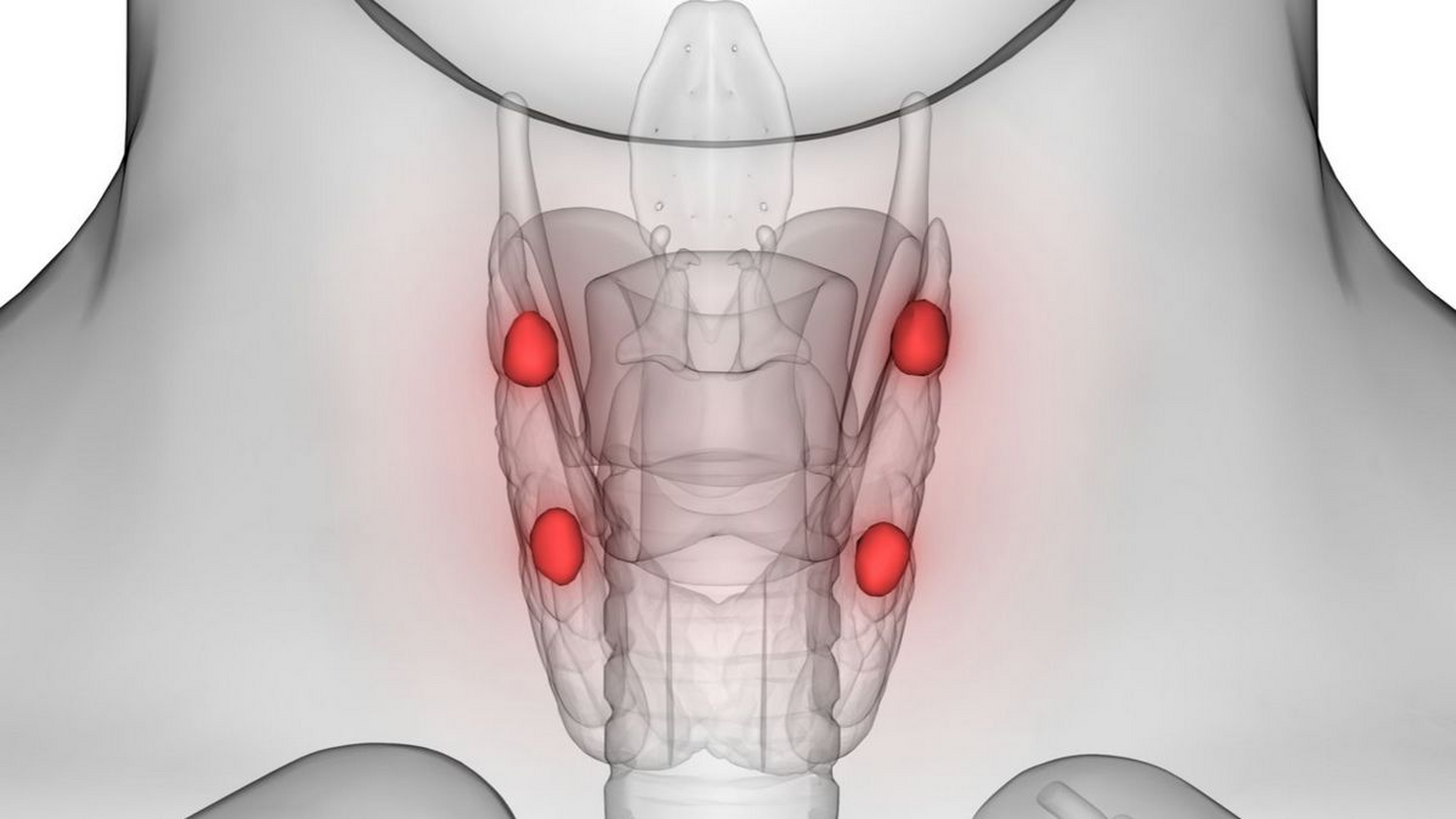
Behind the thyroid are four small parathyroid glands. They regulate calcium levels in the blood.
What Do They Do?
Produce parathyroid hormone (PTH).
Increase blood calcium when levels drop.
Release calcium from bones.
Increase calcium reabsorption in the kidneys.
Why Is This Important?
Calcium is essential for:
Strong bones
Muscle contraction
Nerve transmission
Blood clotting
Parathyroid Disorders
Hyperparathyroidism
Too much hormone.
Symptoms: bone weakness, kidney stones.
Hypoparathyroidism
Too little hormone.
Symptoms: cramps, numbness, tingling.
Thyroid Disorders
Hypothyroidism
The thyroid produces too little hormone.
Like a stove running at low heat — the body becomes “cold.”
Causes:
Severe iodine deficiency
Autoimmune disease
Thyroid surgery
Certain medications
Symptoms:
Fatigue
Weight gain
Cold intolerance
Dry skin
Constipation
Swelling
Slow pulse
Developmental delay in children
Hyperthyroidism
The thyroid produces too much hormone.
Like a stove running at full power — the body becomes “overheated.”
Causes:
Iodine imbalance
Autoimmune disease
Thyroid tumors
Inflammation
Symptoms:
Nervousness
Weight loss
Rapid heartbeat
Sweating
Tremor
Eye protrusion (in some cases)
Now try asking AI how the thyroid gland is connected to various diseases in the body — and you will see how disrupting thyroid function can affect many systems.
The thyroid is presented here as a central regulator of body processes.
If you did not understand something, write to us, and we will explain.